
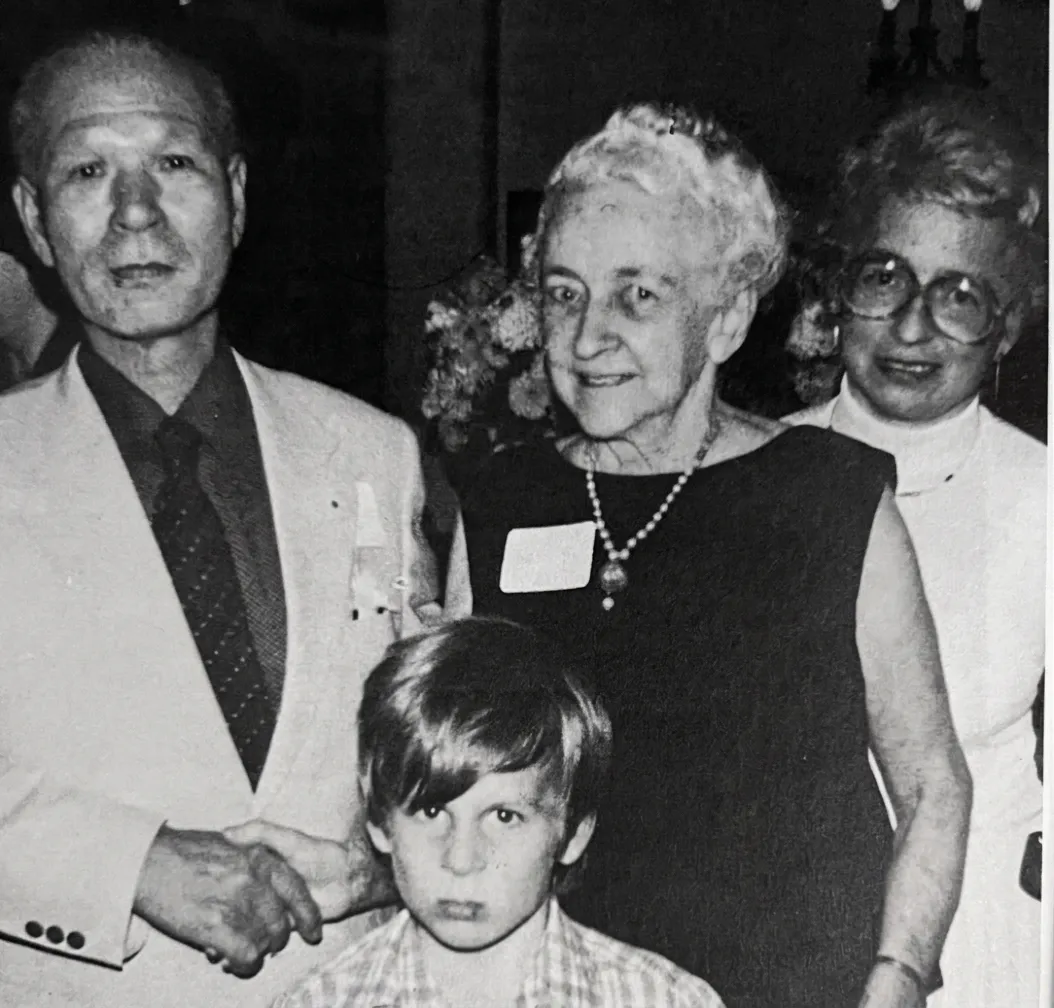
In an era defined by conflict and aggression, Camp Holmes in Baguio City remained a rare and improbable sanctuary. For the expatriates interned there during the war, daily life unfolded under a surprisingly light touch—a mercy they owed almost entirely to their commandant, Bunshiyocho Rokuro Tomibe.
Where cruelty was the default, Bunshiyocho Tomibe brought uncommon humanity. Internee Katherine Ream Sobeck noted in her accounts that without his intervention, starvation would have easily overtaken the camp. He made sure vital Red Cross packages reached the prisoners and used a bit of clever strategy to protect them: whenever high-ranking officials visited, Bunshiyocho Tomibe advised the internees to feign misery so their already thin rations wouldn't be cut further.
That protective shield broke when two internees escaped into the jungle to join the guerrilla resistance. The escape led to his immediate removal, yet Bunshiyocho Tomibe’s concern for the camp never wavered. Other internees—including Natalie Crouter, James Tyson, and James Halsema—later wrote warmly of his kindness, seeing in him the best traditions of Japanese culture.
When the war ended, the former captives returned the favor. They stepped forward to defend Bunshiyocho Rokuro Tomibe, successfully saving the man who had protected them from war crimes prosecution. For the internees at Camp Holmes in Baguio City, Bunshiyocho was a beam of hope. Much like O. Henry’s last leaf, Tomibe made them believe that freedom was still possible, giving them something to hold onto through the darkest days. As long as he was there, they turned to that last leaf—the commandant they endearingly called Bunshiyocho—until the long storm finally passed.
Main photo caption: Former internees of Camp Holmes in Baguio City gathered for a reunion in San Francisco in February 1977. From left, Rokuro Tomibe, Glen Wortman (June's son), Natalie Crouter, and June Crouter Wortman. Source: Natalie Crouter's "Forbidden Diary: A Record of Wartime Internment, 1941-1945". Edited by Lynn Z. Bloom. 1980.
comments
00