
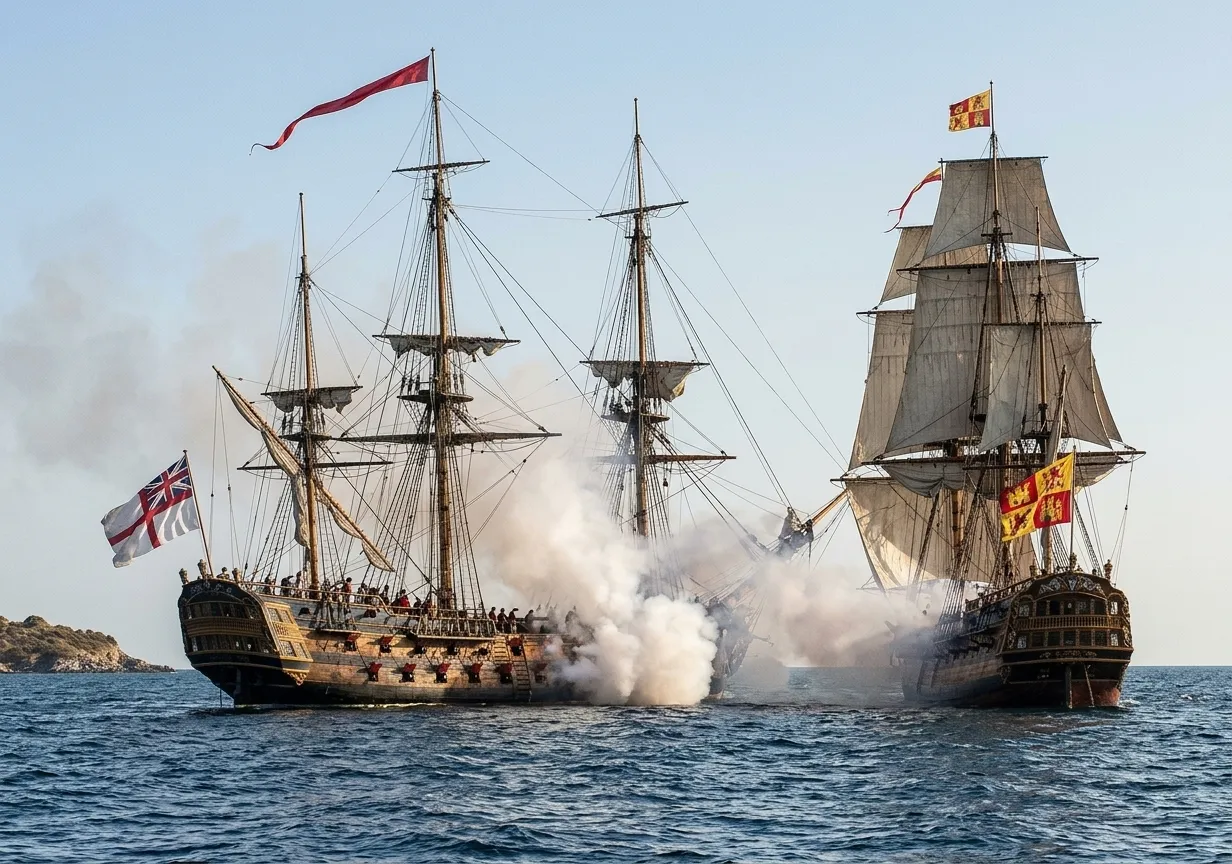
I spent an afternoon doing what any lover of obscure history does best: digitally turning the fragile, yellowed pages of pre-war periodicals preserved on the Internet Archive. It was there, amidst the digitized issues of A.V.H. Hartendorp’s Philippine Magazine—a publication that always felt like the Manila equivalent of The New Yorker—that I stumbled upon Percy A. Hill’s account of the British Occupation of the Philippines.
Hill wrote about the 1762 British siege of Manila not as a dry academic, but with the crisp authority and gusto of a man who understood both military strategy and human nature. Intrigued by the author behind this sprawling multi-issue narrative, I dug into newspaper archives, only to learn of his tragic end. A brief report in The New York Times recorded that Hill—originally from Watertown, New York, and a veteran of the 46th Infantry NY Volunteers during the Philippine-American War—had been murdered at his home in Nueva Ecija. After his service in the Philippine Constabulary, he had fallen in love with Martina Ramos, settled on the central plains of Luzon, and made the country his home. He stayed, farmed, and preserved the islands' history until his life was cut short.
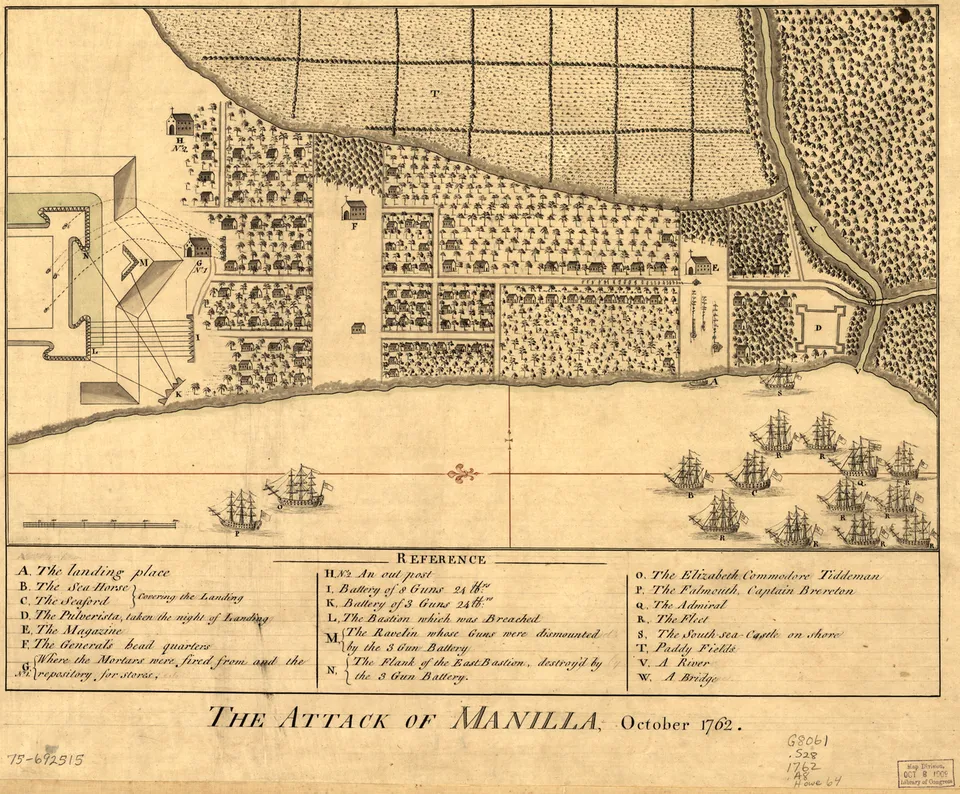
Reading Hill’s chronicle reveals just how chaotic and contingent history really is. The British invasion was never meant to be an act of long-term nation-building; it was an opportunistic side-show of the Seven Years’ War, driven by the mercantile ambitions of the East India Company and a thirst for a lucrative ransom. Admiral Walter Cornish and General William Draper landed their troops through the surf of Malate under heavy monsoon rains, seizing stone churches outside the Walled City to set up gun batteries while the Spanish leadership faltered in bureaucratic confusion.
What followed was a short-lived but severe transformation. Intramuros fell after British artillery battered a breach into the bastion of San Diego, leading to a harrowing thirty-hour sack of the city and a staggering four-million-peso ransom demand. Yet outside the capital, resistance flared under Judge Simón de Anda y Salazar and militant friars, while internal rebellions—like those of Diego Silan in Ilocos and Juan de la Cruz Palaris in Pangasinan—showed how quickly the illusion of Spanish invincibility had shattered.
The British occupation lasted only until 1764, formally concluded by the Treaty of Paris that ended the war in Europe. But reading through Hill’s narrative, it is hard not to pause at the immense "what ifs" left in its wake.
Had the British stayed under the management of the East India Company, the entire trajectory of the archipelago would have pivoted. The country might have been drawn directly into the supply chains of the 19th-century Opium Wars in China. A nation of tea drinkers might have emerged instead of coffee lovers. The English language would have taken root over a century earlier, and family trees today would be filled with Georges, Victorias, Charleses, and Edwards. The islands might have become a British Commonwealth realm or taken an entirely different path to self-rule. And in the 20th century, a trajectory akin to British Malaya might have altered the course of the Japanese invasion following Pearl Harbor.
Instead, history took another turn. The British departed, the Spaniards returned, and over a century later, the Americans arrived—bringing young soldiers like Percy A. Hill. Out of that period grew a long, battle-tested relationship, remembered by an older generation through their deep reverence for General Douglas MacArthur.
Flipping through those old magazine pages brings a deep appreciation for writers like Percy A. Hill. He recorded a moment when the Philippines stood at a crossroads of empires, leaving behind a reminder of how easily the course of history can shift.
comments
00