
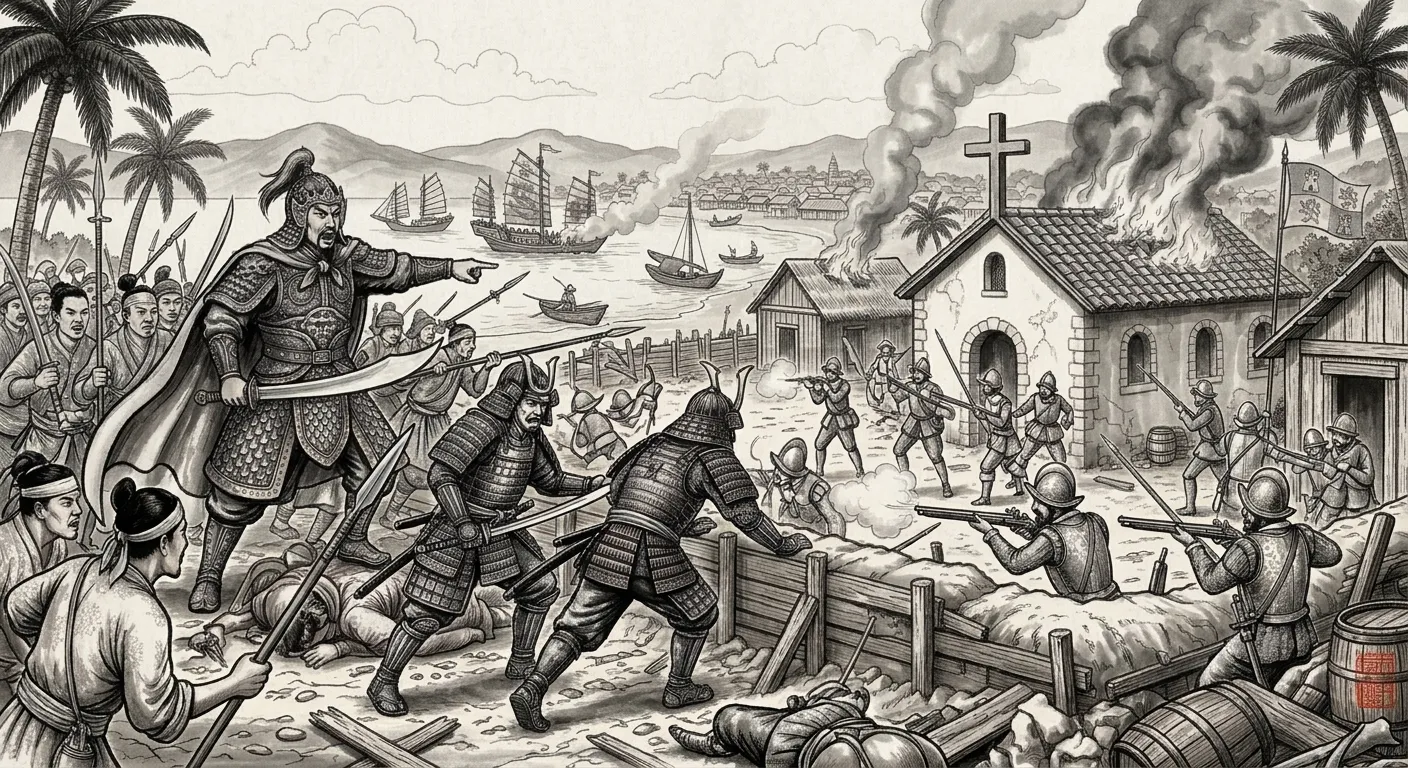
A long time ago, before Manila became a busy capital, the southern coast of China was troubled by pirates. The most notorious was Limahong.
When the Chinese fleet drove him off, he turned south toward the Philippine islands. Along the way, his crew seized a trading ship bound for China and learned that Manila was a new Spanish outpost guarded by two hundred men. To Limahong, two hundred men meant opportunity. He planned to replace the Spaniards with his own fleet of sixty junks,carrying six thousand men, women, and children to build a permanent settlement. He made a deal with a Japanese pirate commander named Sioco and set out to take the settlement.
It was 1574. Manila had been established three years earlier after Martin de Goiti defeated Raja Sulayman. Ferdinand Magellan had reached the islands in 1521, where he died at Mactan, and the Spanish had built their first base in Cebu before turning their attention north to Manila’s harbor. Now Limahong was coming for it.
He sent Sioco ahead with seven hundred men to strike first. Heavy seas disrupted the landing, forcing the party ashore at Parañaque to march the rest of the way. As they approached, skirmishes with locals alerted the town. De Goiti, sick and outnumbered, tried to hold off the attack, but he and his defenders were killed.
Sioco’s men pressed on toward the wooden stockade. Spanish soldiers met them, delaying the assault until reinforcements arrived and drove the invaders back to their ships at Cavite.
Limahong regrouped for a second attempt. Sioco launched a three-pronged attack to divide the garrison, but the Spanish were prepared. The pirate lines broke, Sioco was killed, and his remaining troops retreated.
Outside the stockade, chaos spread. Escaped slaves fled along the Pasig River, while local residents in Tondo raided churches and captured clergymen. As Limahong’s fleet waited off Parañaque, Spanish reinforcements arrived from neighboring islands under Juan de Salcedo, who negotiated the release of the hostages with Raja Lakandula.
Realizing he could not capture the town, Limahong burned San Agustin Church, plundered Parañaque, and sailed north. Months later, Salcedo’s forces pursued him to Pangasinan and destroyed what remained of his fleet.
Limahong escaped. Some accounts say he refused an invitation to join the Chinese emperor’s service; others claim he fled a Chinese viceroy named Wang Wanggao or later traveled to Siam or India.
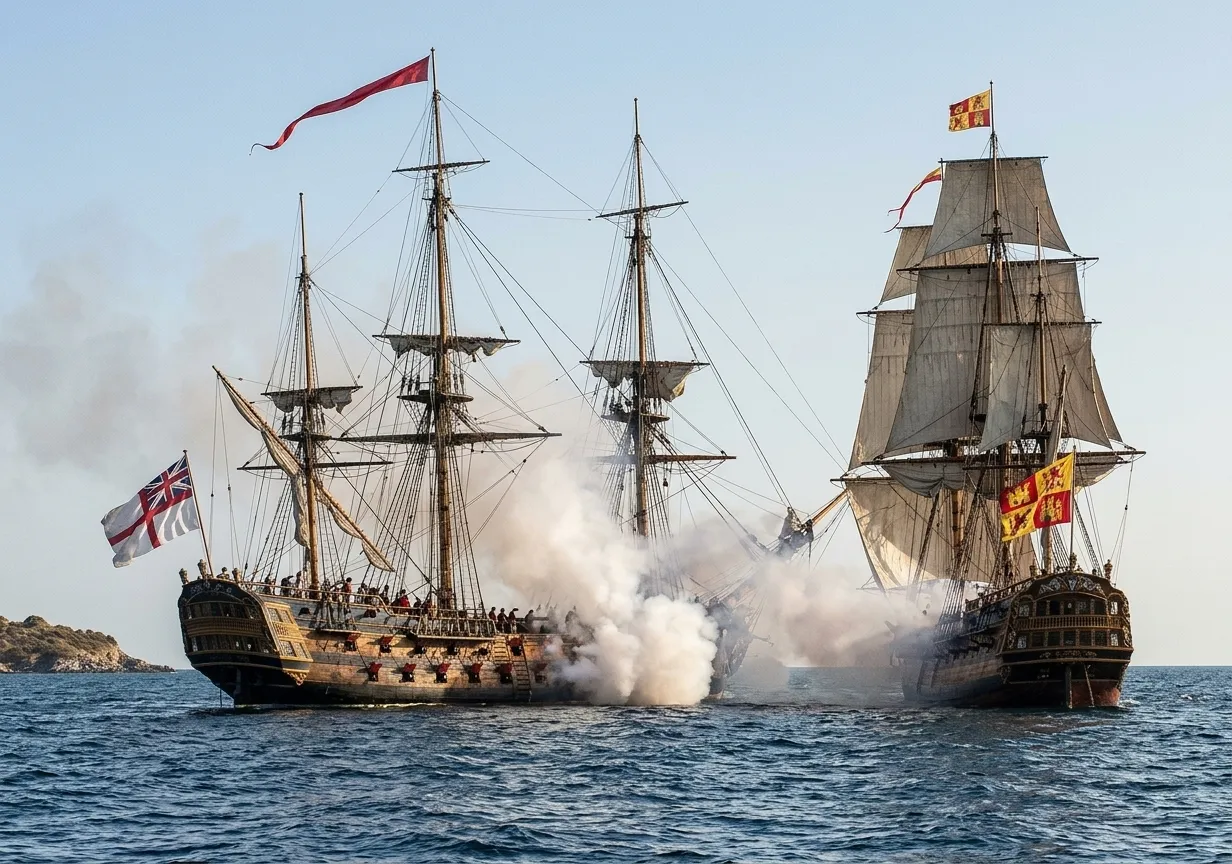
Limahong’s force of Chinese and Japanese pirates was the first to challenge Spanish rule in the Philippines. The raid prompted the Spanish to replace their wooden palisades with stone walls, creating the fortified city of Intramuros.Later, the Dutch, British, and Americans would launch their own attacks on Manila, but Limahong was the first to try.
comments
00